Xi'an - Day 3

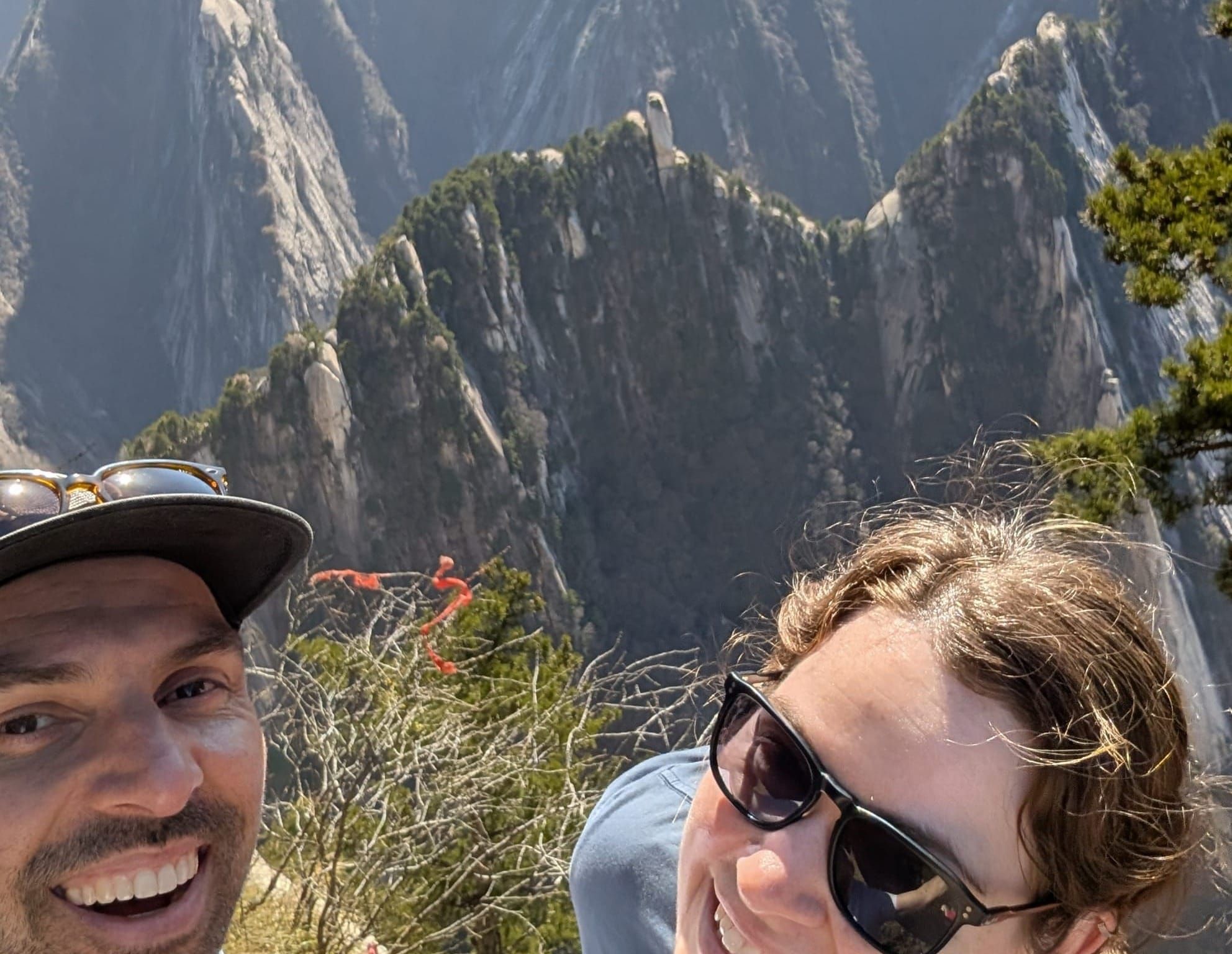
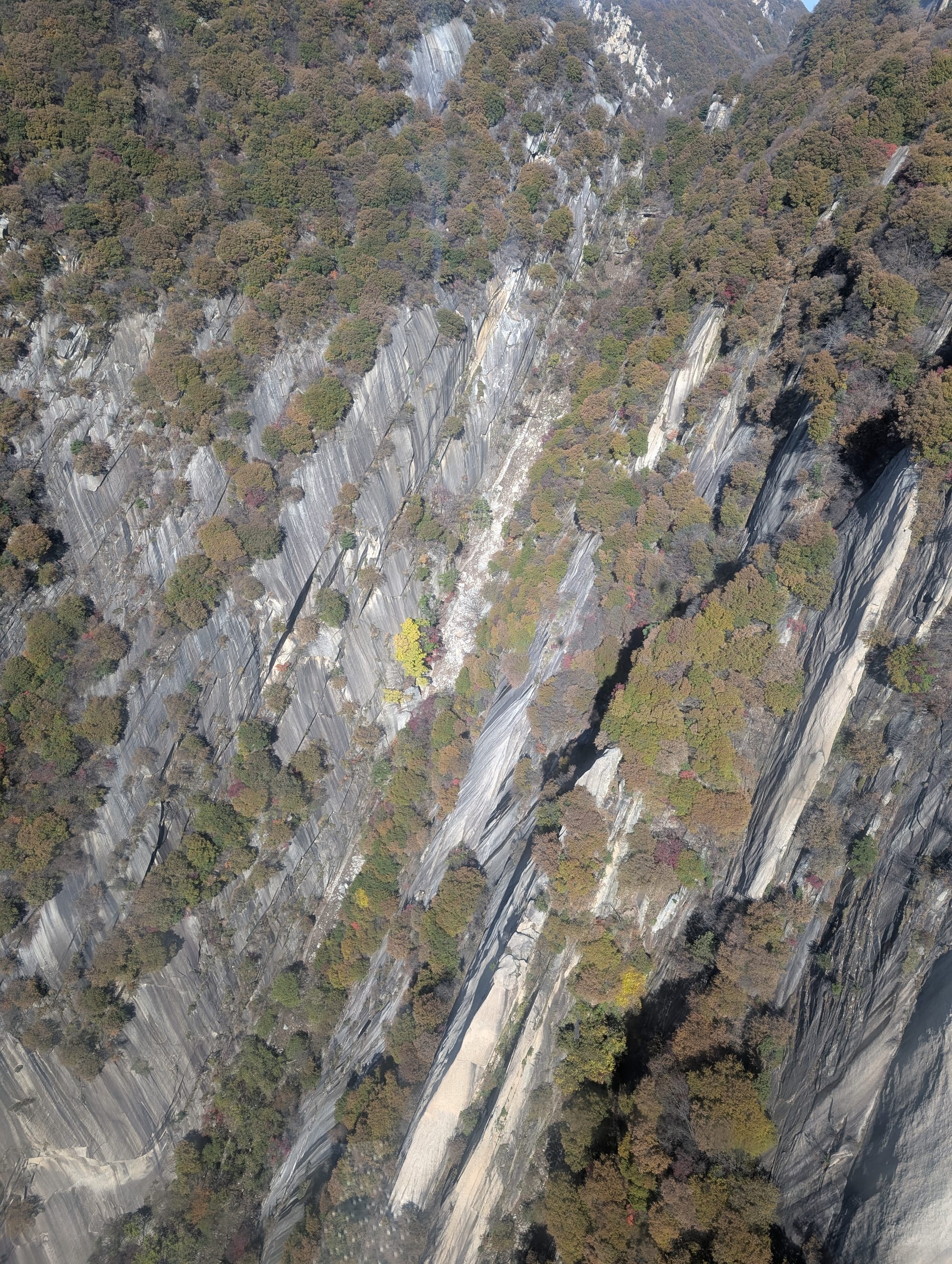
We're heading up to Huashan Mountain for our last day in Xi'An - well, Shaanxi province. We've hired a private driver for efficency (and luxury! Man, you should see the car we've got). It's about 2 hours away.
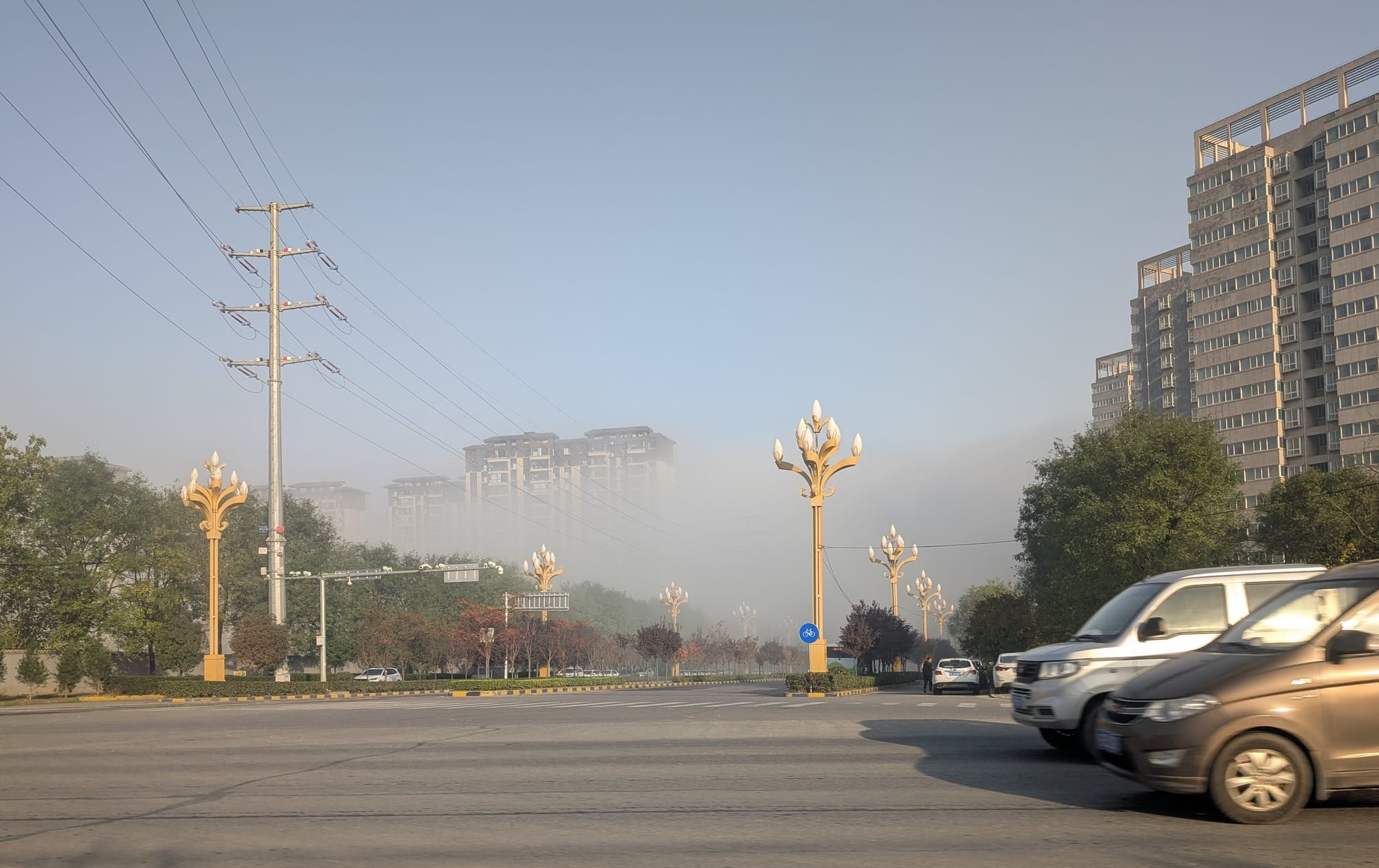
We drive through smog so thick it's like bushfire smoke as we go through the low-lying Guanzhong Plain. There’s a dark irony in the fact that the same geographic features that helped make this region a cradle of Chinese civilisation have also left it vulnerable to some of modern civilisation’s worst symptoms.
We come through a town at the foot of the mountain. It's hard to know how much of it is actually functioning. Dilapidated buildings for kilometers. But are they housing people? Are they open for business? Are there people staying in those hotels? We couldn't quite figure that out. Either way, it was a sad old main street.
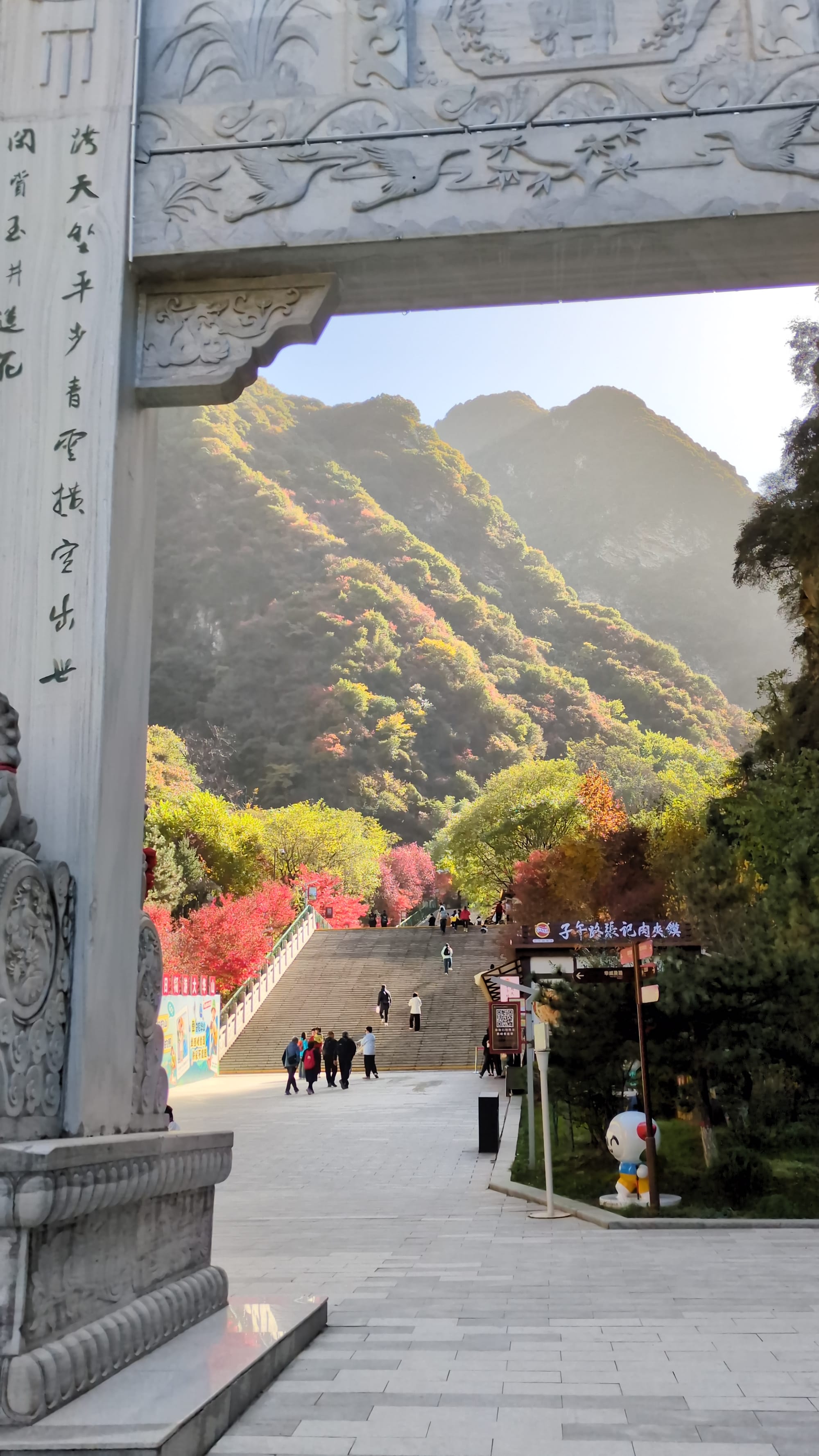
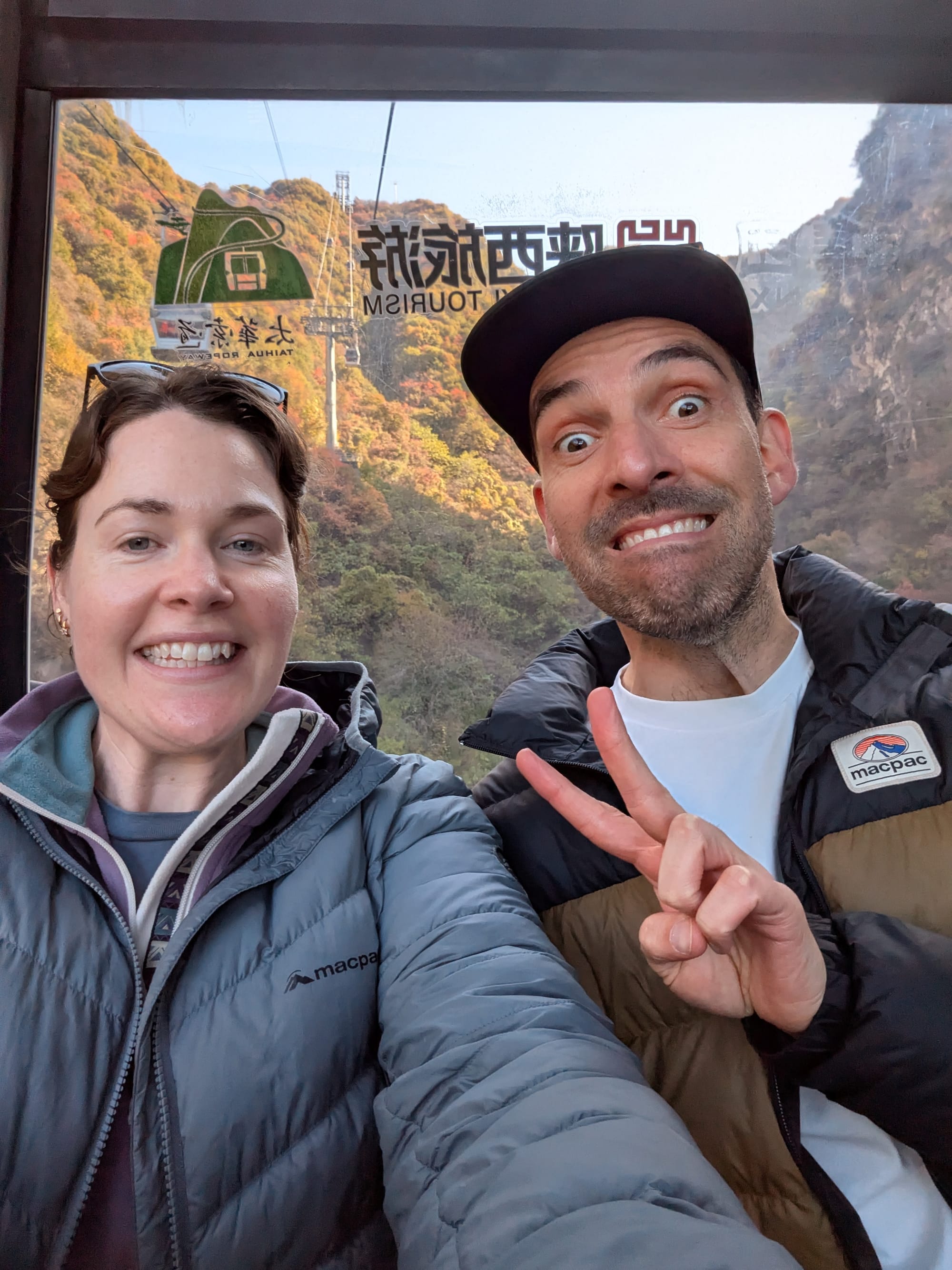
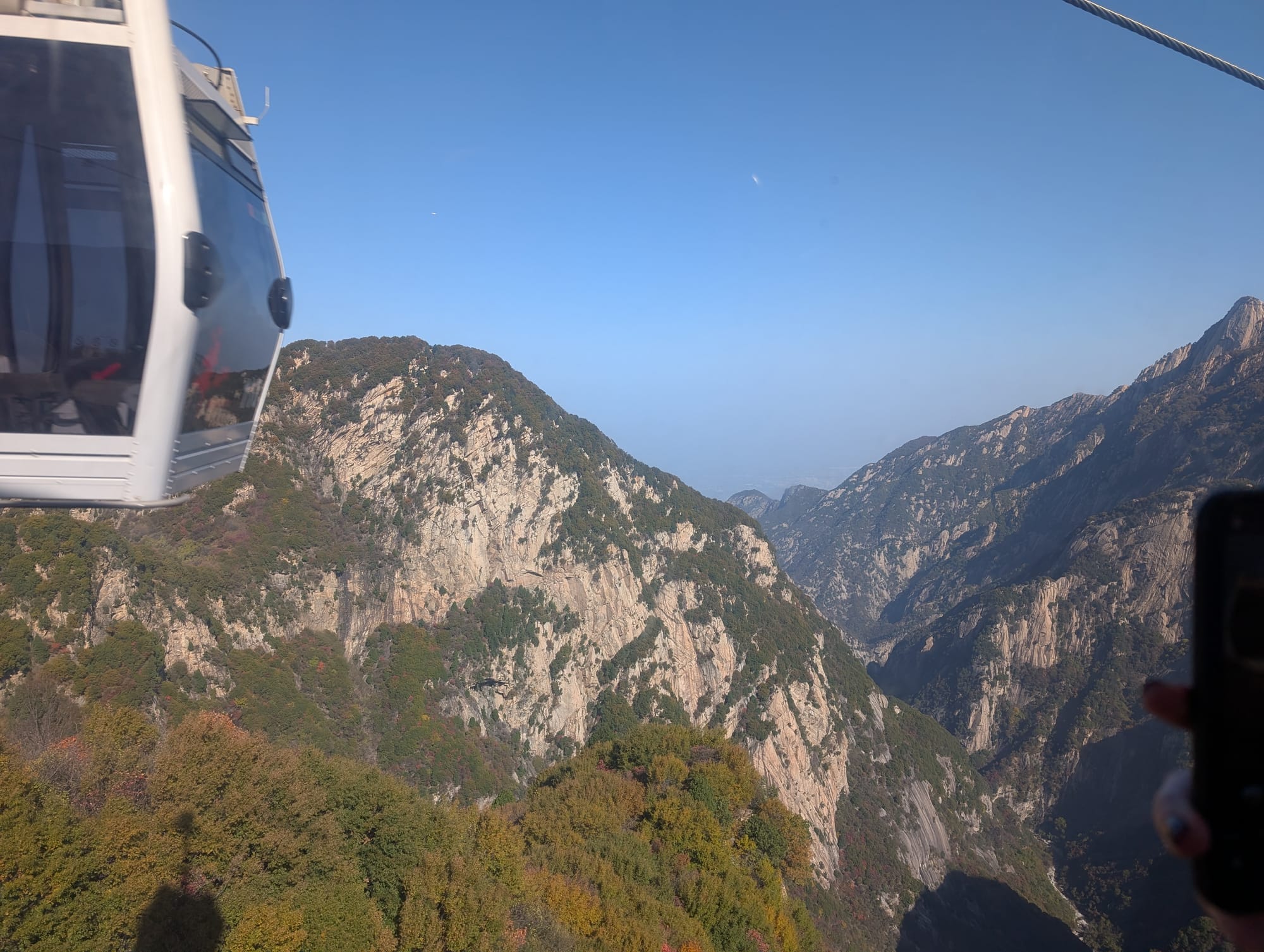
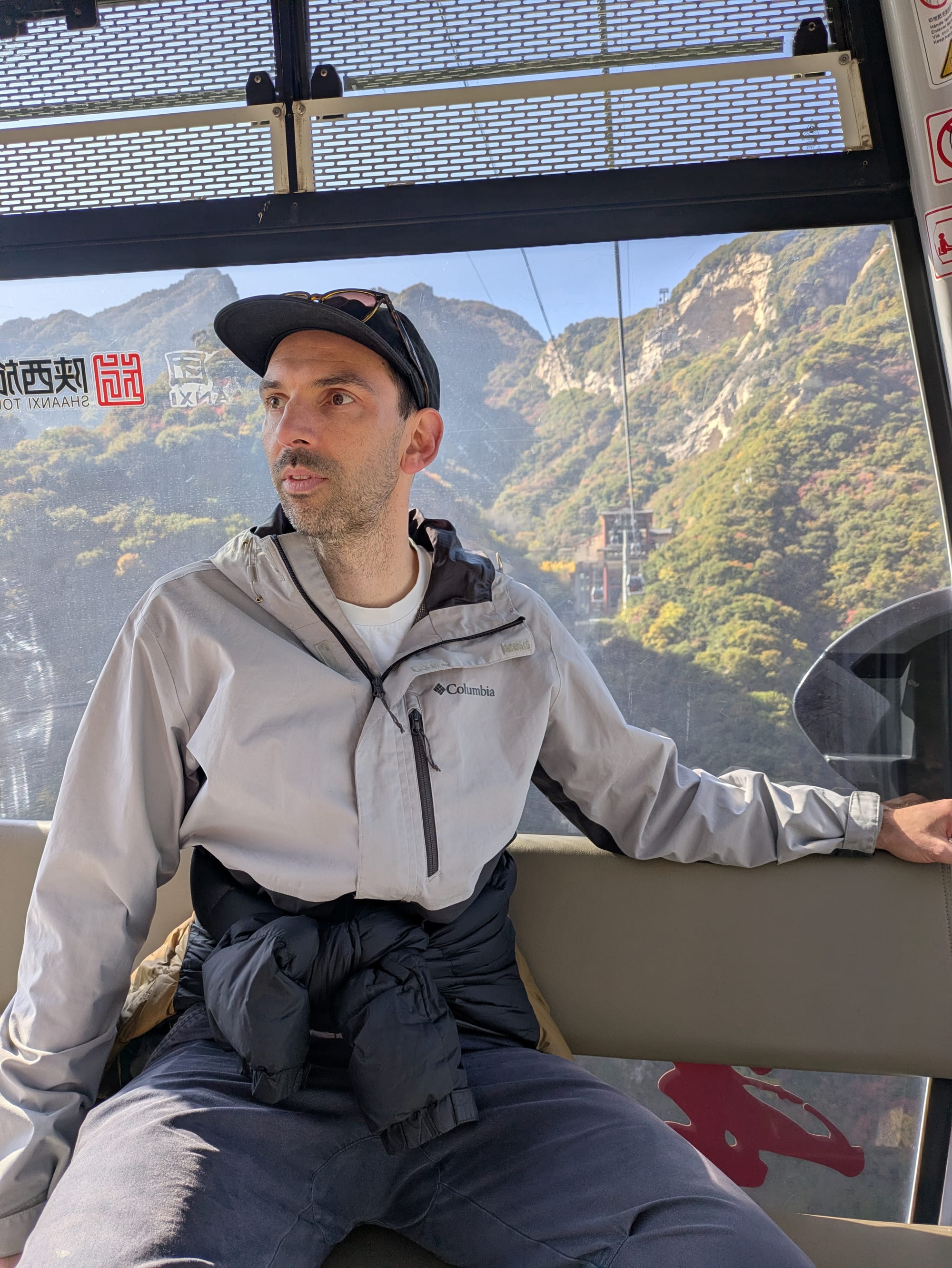
As we board the shuttle bus which takes us to the entrance of the mountain park we're once again wondering why a couple of acrophobes like us have decided to climb 2000 metres (at times 900 metres above the ground) in a tiny cable car. But we reassure ourselves that people have been climbing to the top of this mountain for hundreds of years (documented records from Ming era) and so far the extraordinary Chinese infrastructure hasn't let us down.
A few deep breathes and 20 minutes later and we are at the top. The final stage of the trip has us entering the face of a sheer mountain face; like entering a Bond lair. My hands were too shakey to take a good photo, sorry.
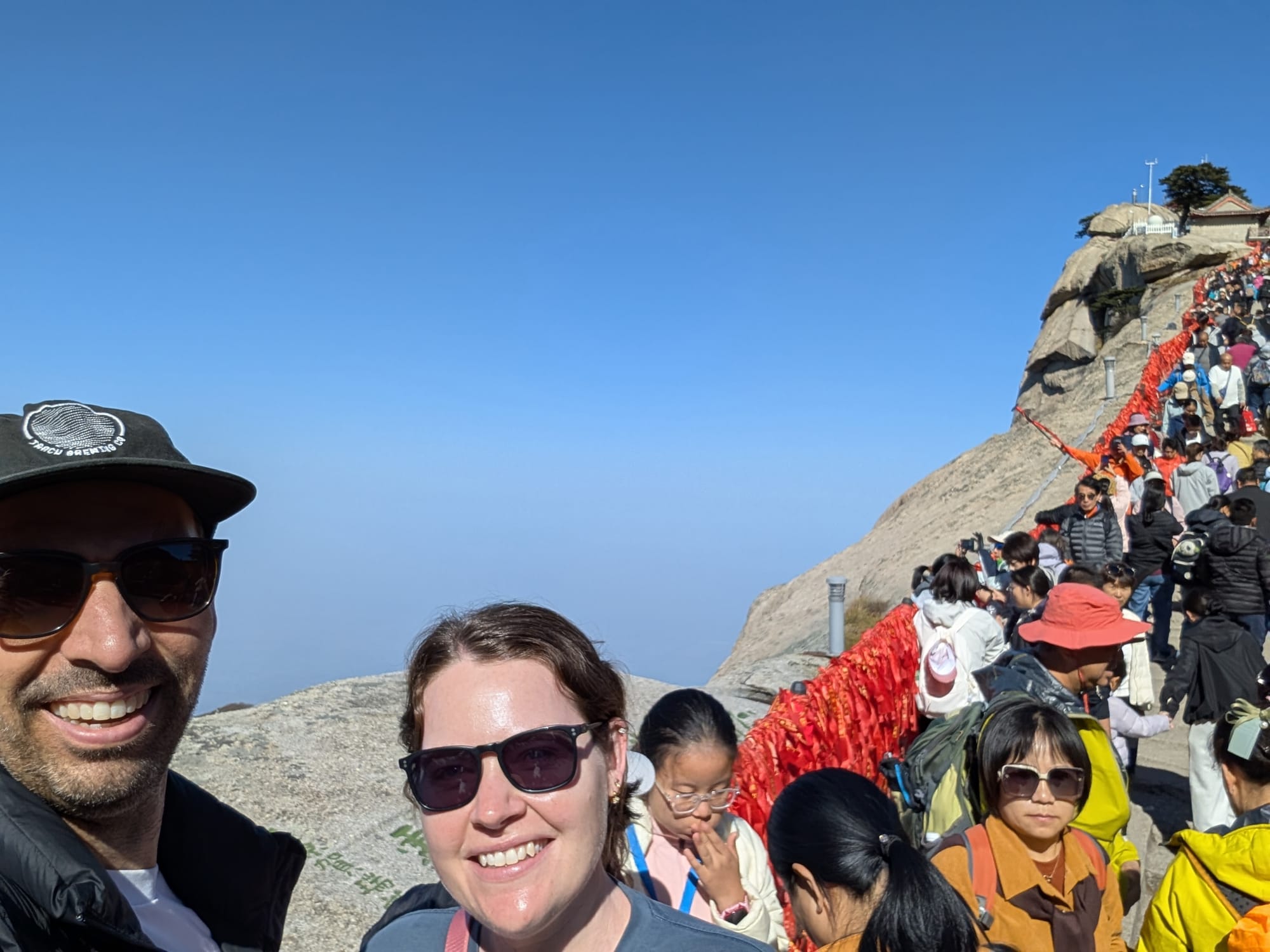
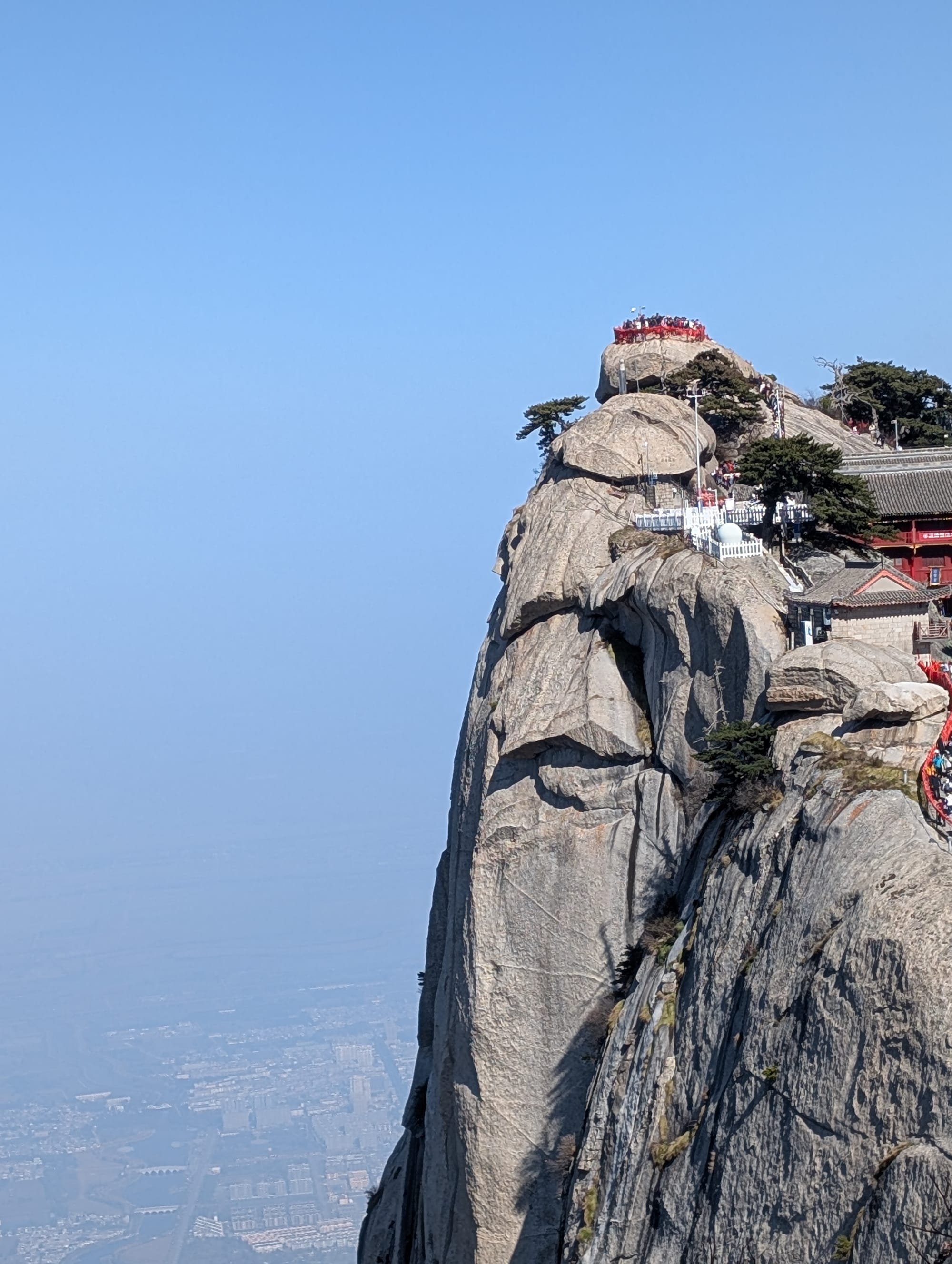
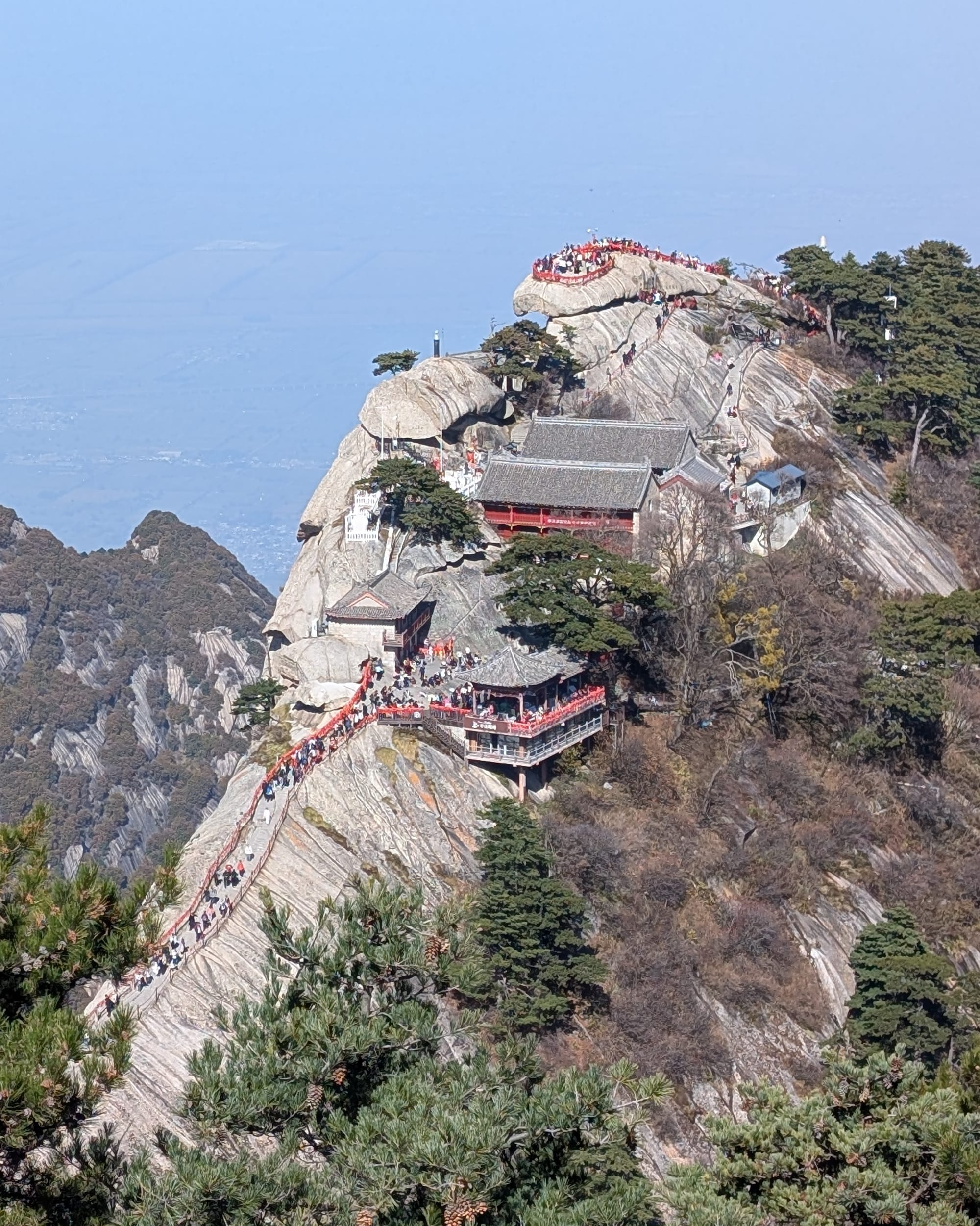
We follow the crowds up. There are two peaks to choose from. Both are busy. One looks like it will be more fun to take photos of, rather than climb, so we head to the higher South peak.
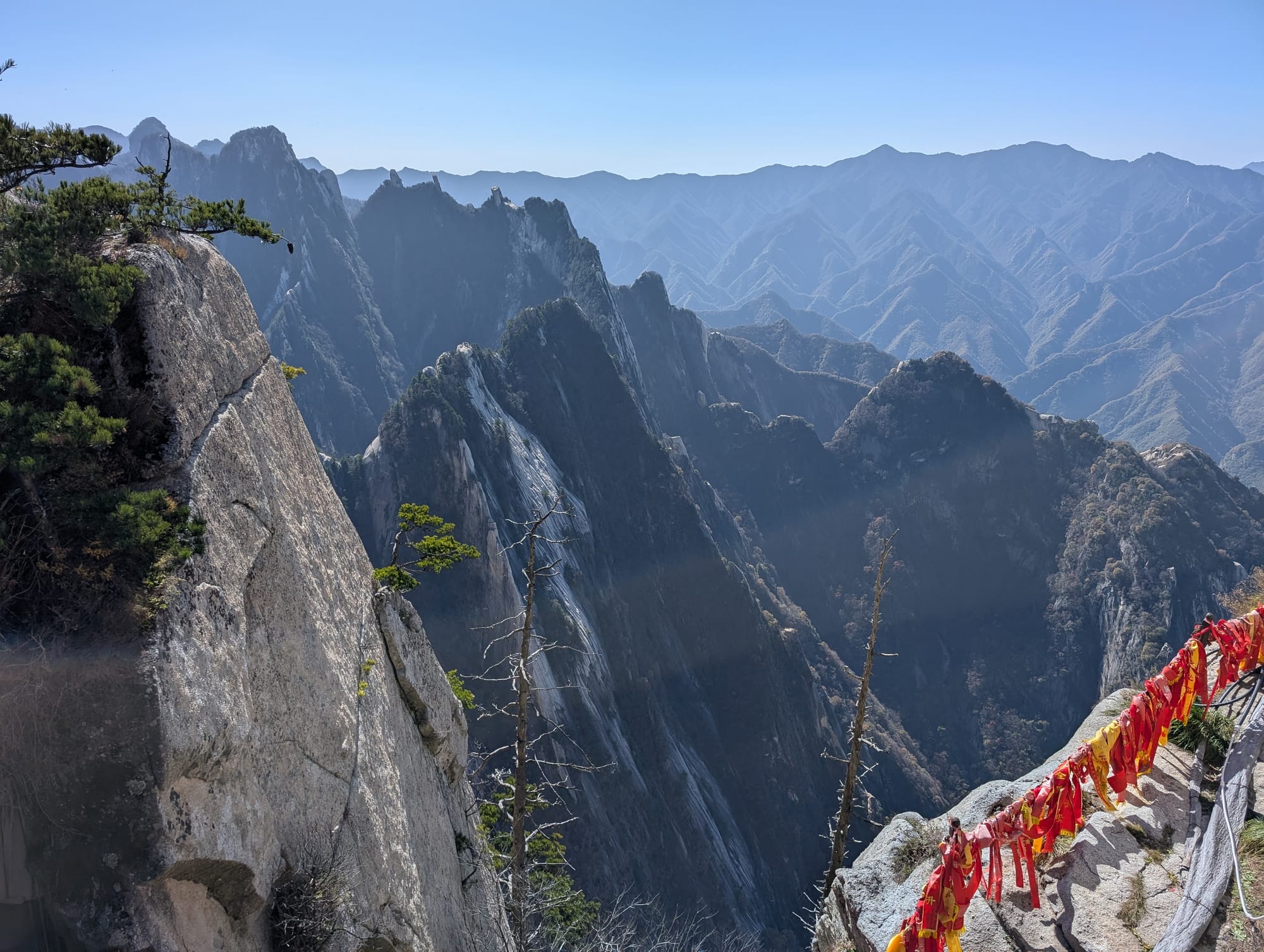
As we get closer to the top the crowds thicken. Hundreds of people squeezing onto the small tip of the peak. We get "close enough" and wander down. There are plenty of different sections of the mountain to explore and lots of steep steps and sheer drops for the views. There are also some nice quiet sections where there are breaths of serenity. We can't even imagine what this place would be like in high season. Not fun, clearly.
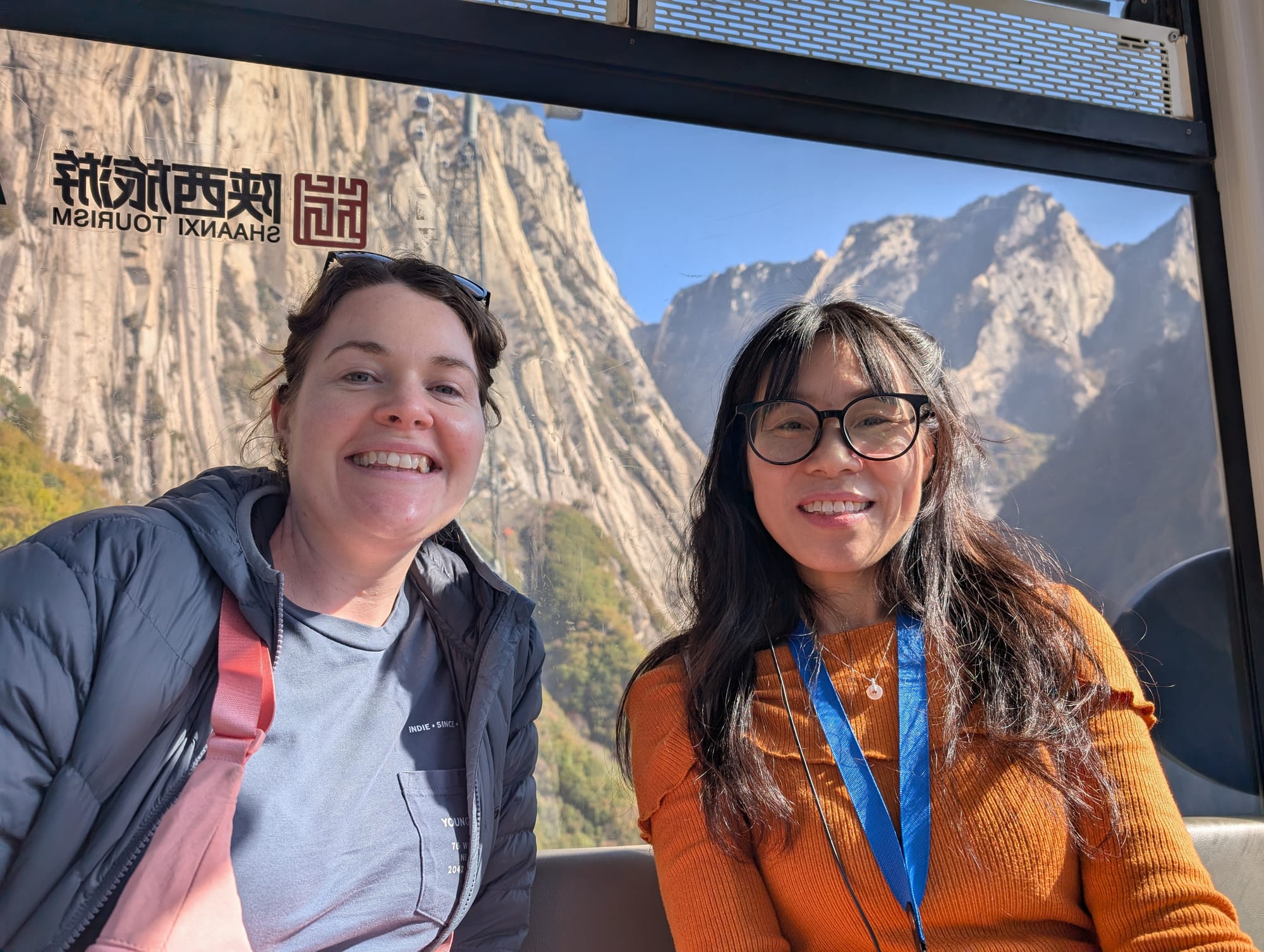
Back down in the cable car we go. It should have been easier, but it wasn't. There is only one other person in the carriage. Thankfully, for a good distraction, she is obsessed with the fact we are westerners and is keen to communicate, take our pictures and analyse our facial features. Our interpretation of her analysis: Jeff has nice teeth but a big shnoz. Fair.
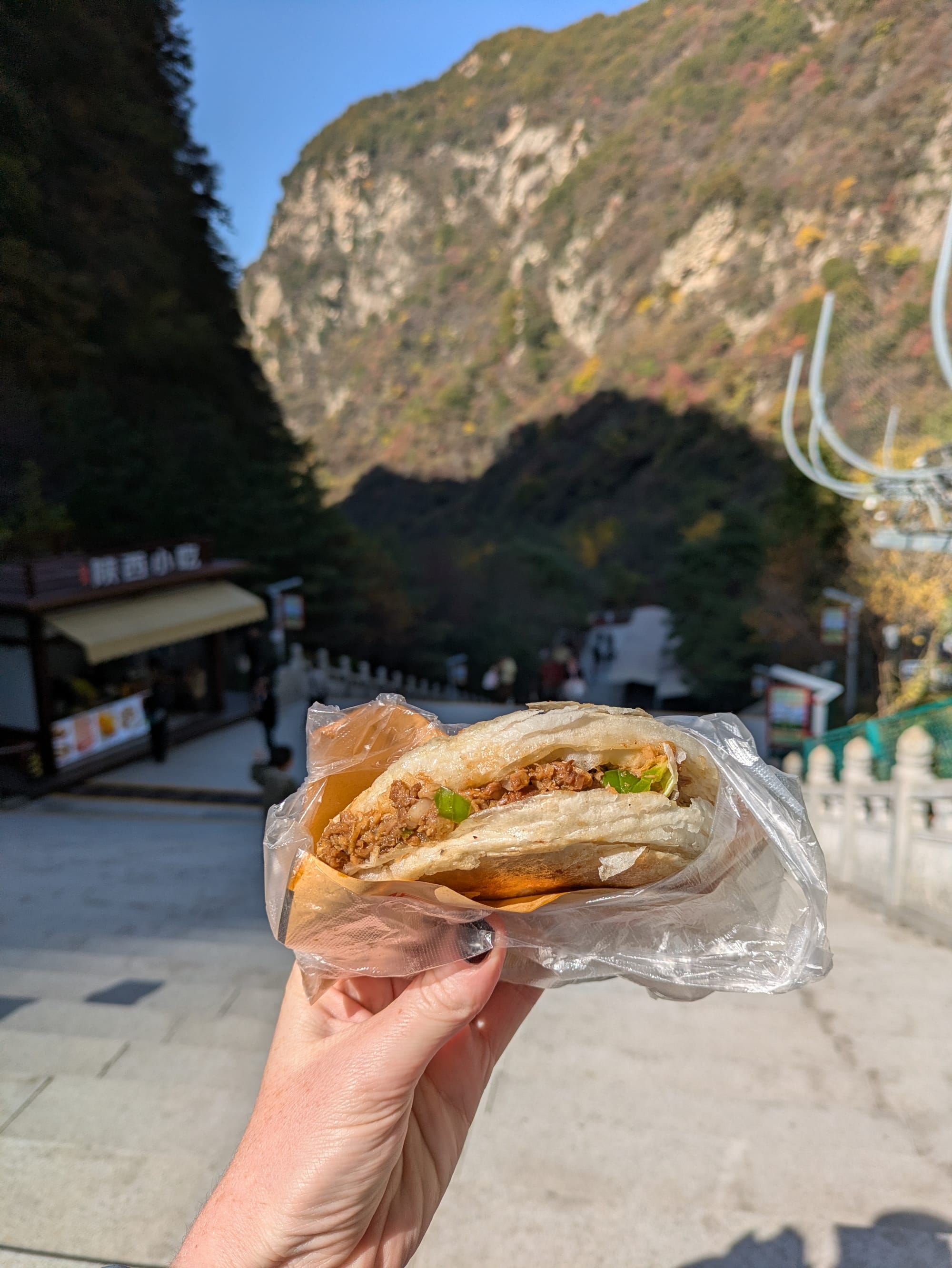
We grab a couple of average roujiamo (meat filled bread) for the road and soon enough we are cruising back to Xi'An.
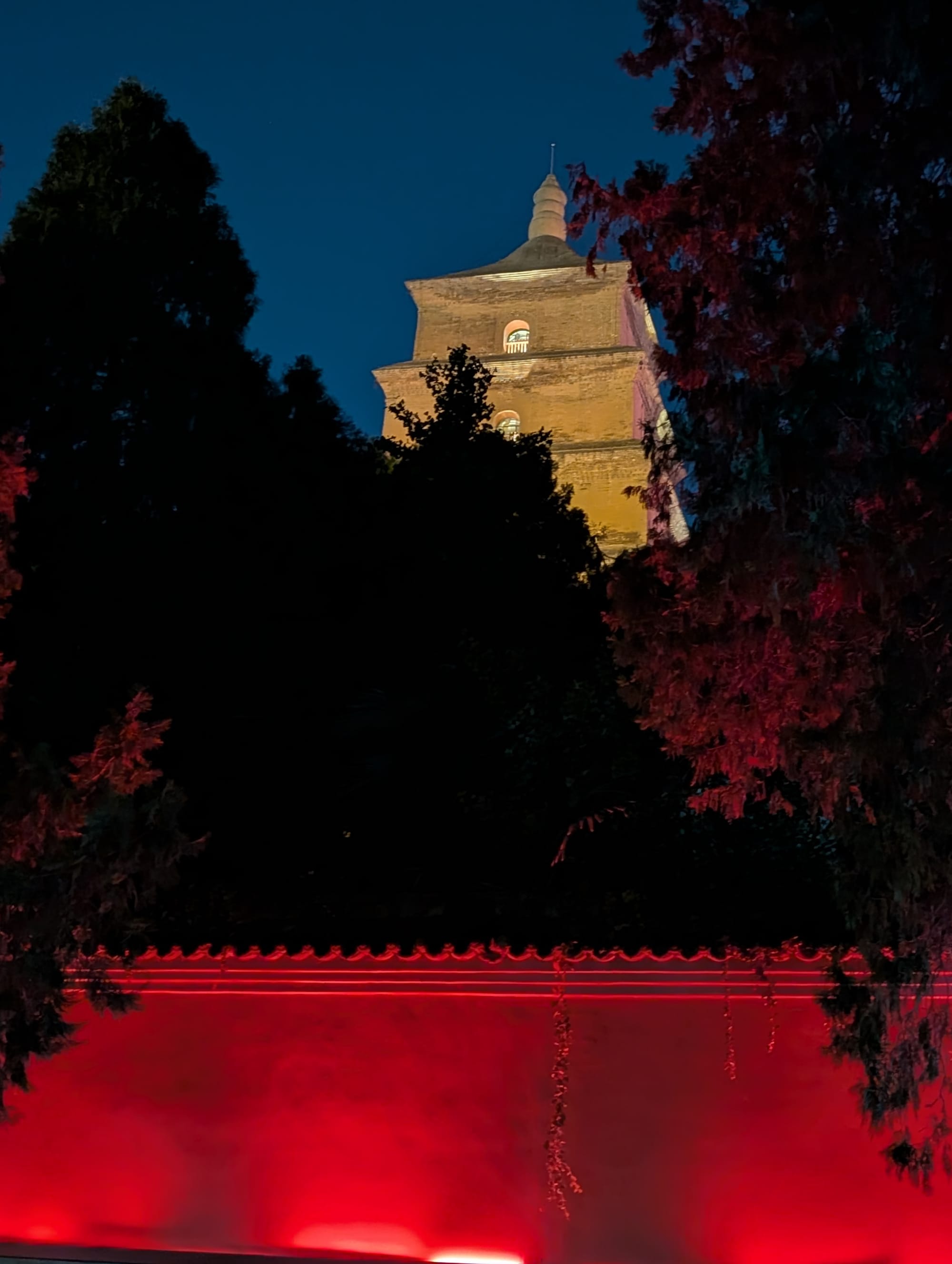
We freshen up and make plans to tick off two remaining items on the bucket list here: The Wild Goose Pagoda and some Biang Biang noodles.
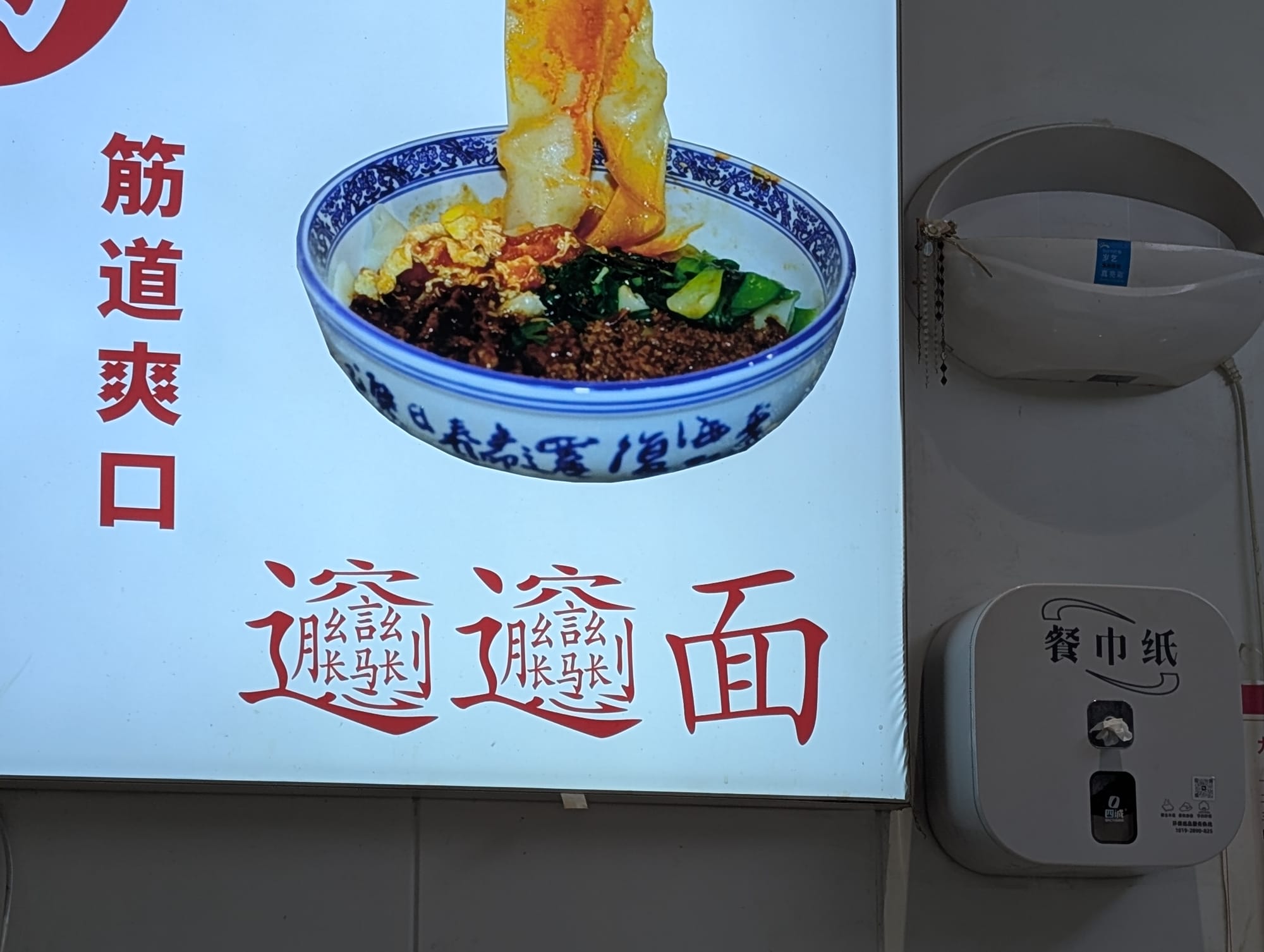
Fun fact - the Chinese character for Biang is one of the most complex in the language. About 70 strokes worth.
We get the metro to the area, walk away from the attraction a bit and into the first place that has a picture of the biang biang dish we want on the wall.
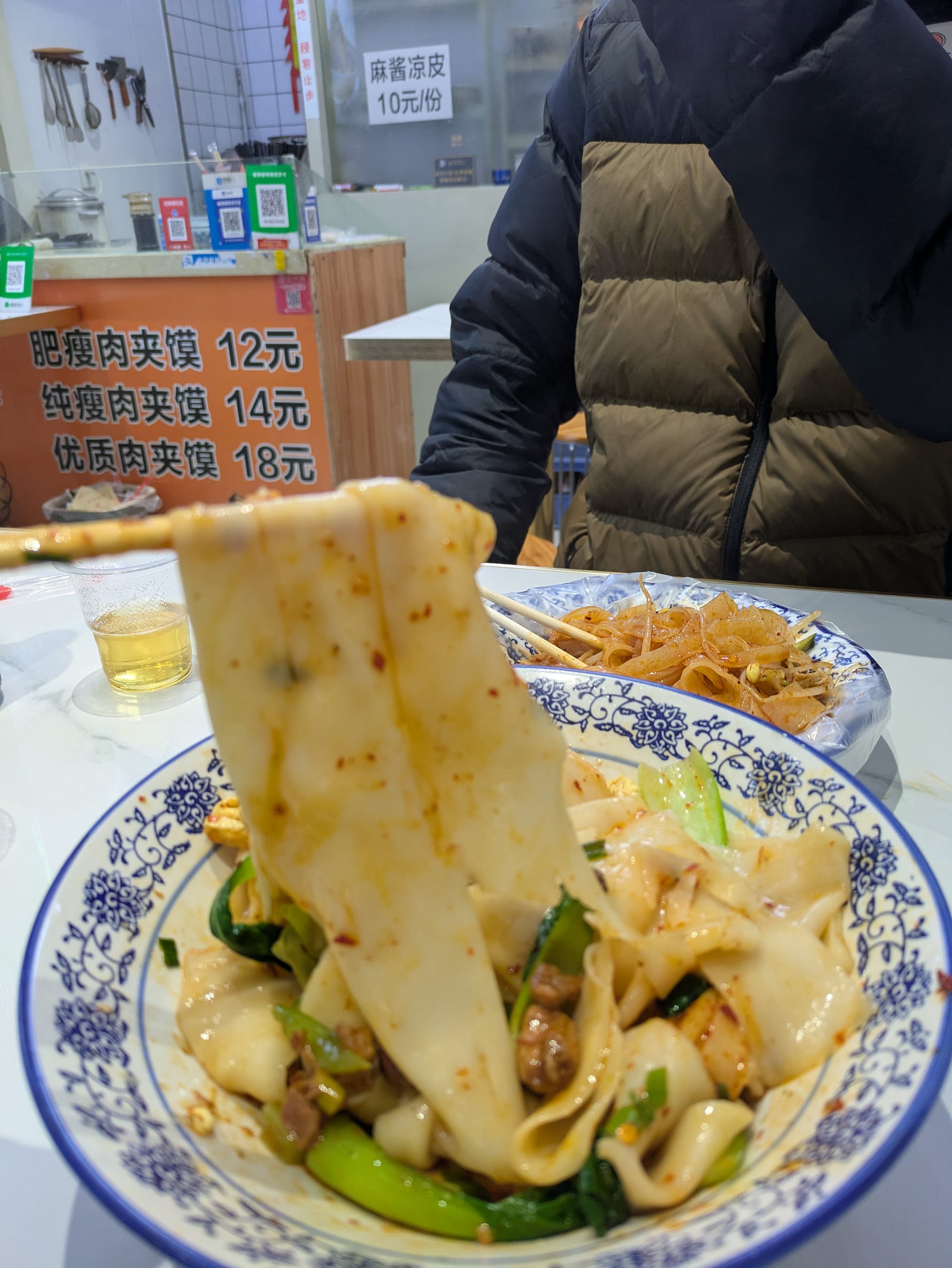
A cold 3.6% beer, a side of a cold noodle dish and the main event. The traditonal biang biang dish has meat, tomato, bok choy, chili oil and a few other bits and bobs. The main event is the belt width chewy noodles though. They are sensational.
The owner is also intruiged by having a coupe of westerners in his joint. He comes over later with a video of someone who he thinks looks like Courtney.Well, the person in the video is definitely Caucasian. And female.
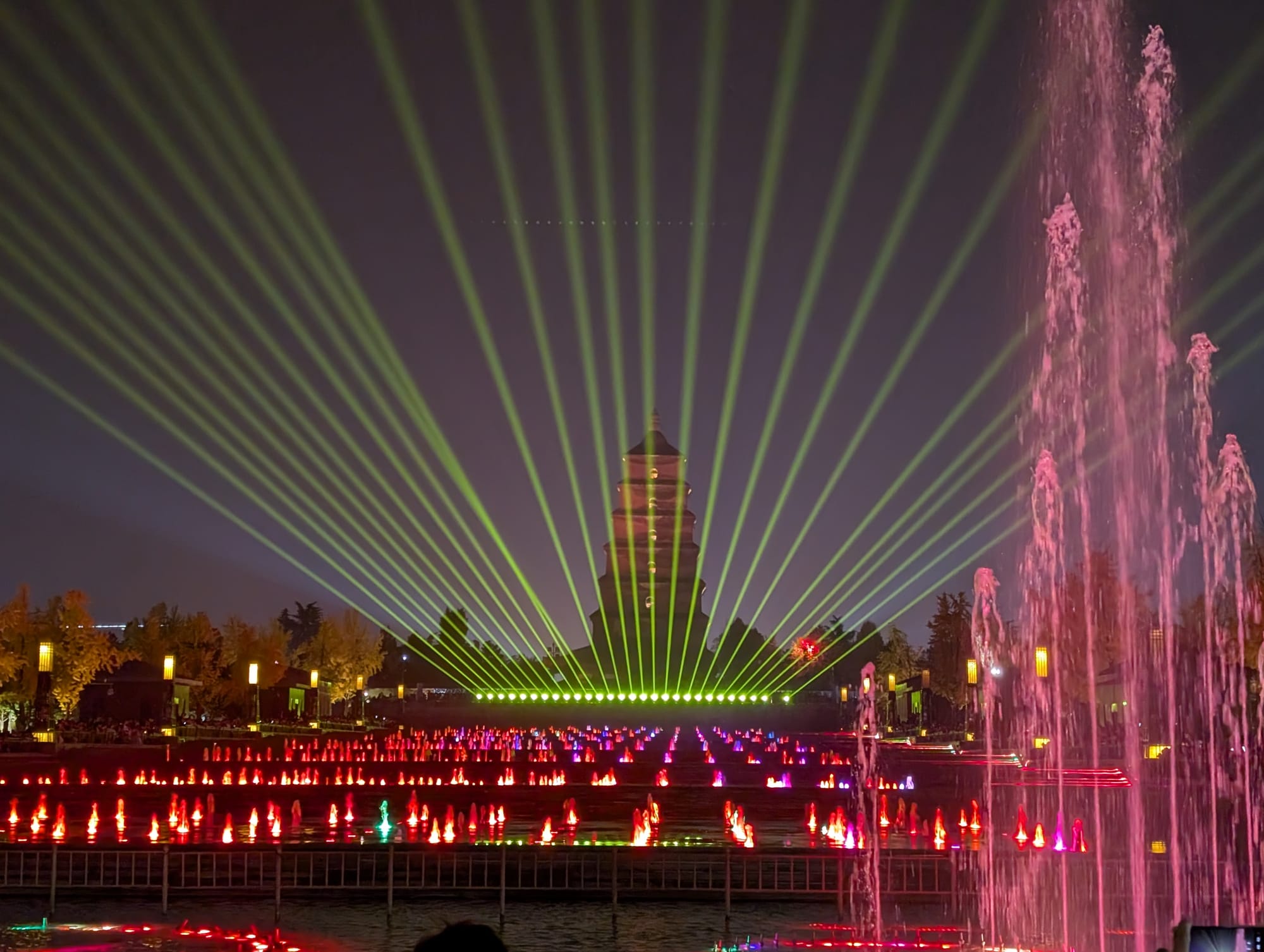
We head off towards the pagoda. We've been warned it'll be touristy. And again it feels like we've stepped into the Royal Adelaide show. We have an icecream, do a lap of the square, people watch and again try and unpack what China is. Clearly too hard for us to figure out still. We'll try again in a couple of weeks.
Side note on the payment system across China with AliPay and Wechat Pay - A little clunky sometimes compared with tap. But hey, being able to pay a merchant 40 cents for a drink at the top of the Great Wall of China by scanning their QR code is a good system. Especially when every inch of China seems to have great telecom coverage. And often the person paying has to key in the amount, meaning good practice for learning the numbers!